
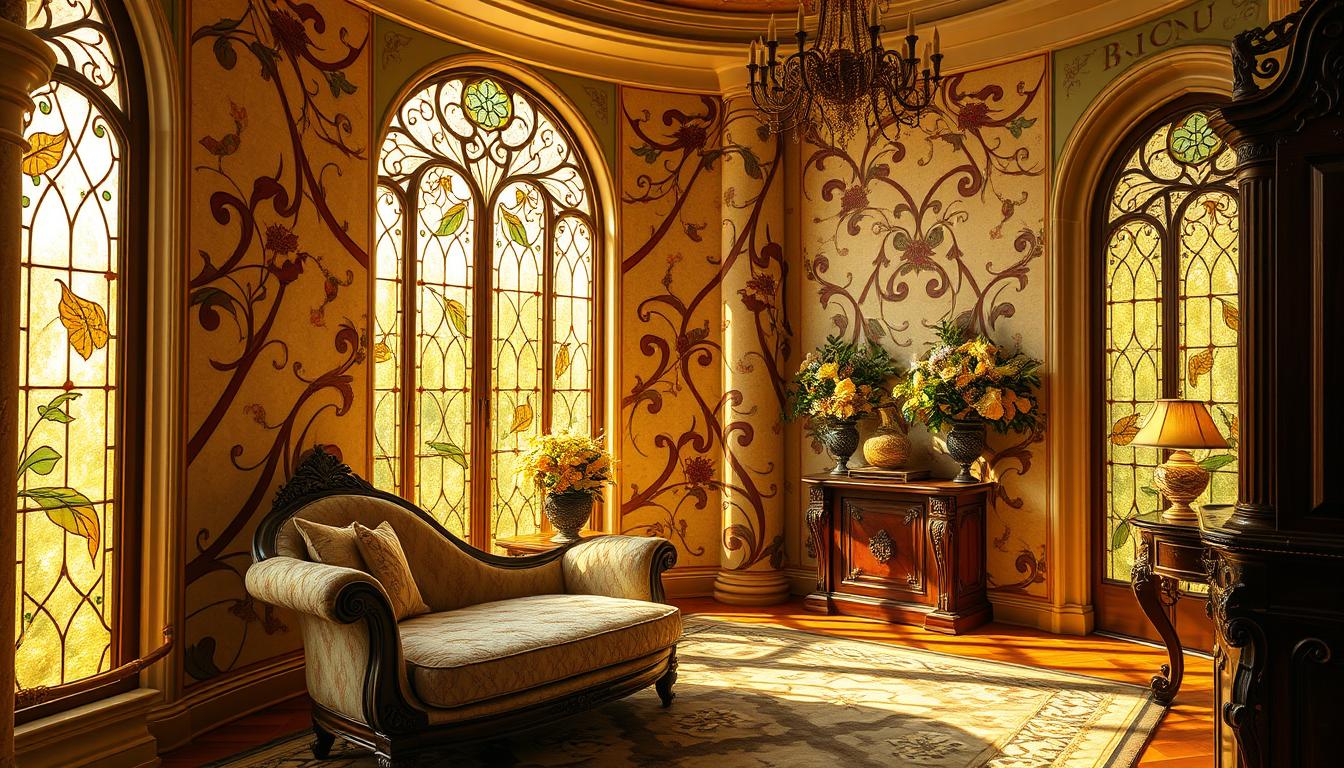
Did you know that adding Art Nouveau elements can make your home look better and increase its value? This style, known for its flowing lines and natural shapes, can turn any room into a stylish space.
We’ll show you how to make your home more beautiful with Art Nouveau interior design. By using its special features, you can make a space that looks great and shows off this famous design style. We aim to help you bring this elegant style into your home.
Key Takeaways
- Understand the core elements of Art Nouveau style
- Learn how to incorporate sinuous lines and organic forms into your decor
- Discover how to balance elegance with functionality
- Explore ways to add sophistication to any room
- Create a unique and captivating home atmosphere
What is Art Nouveau Interior Design?
Art Nouveau interior design is a style that started in the late 1800s and early 1900s. It aimed to move away from old, stiff designs. Instead, it embraced a more flowing and natural design approach.
Defining the Style
At its heart, Art Nouveau focuses on smooth, flowing lines and decoration. It takes inspiration from nature, like flowers and leaves. These elements are woven into detailed and stunning designs.
The style is known for its love of decoration and ornamentation. This is seen in its complex patterns, curved lines, and mix of old and new craftsmanship.
Historical Context
Art Nouveau came about as a reaction to the industrial age. People wanted to see beauty and skill in everyday things again.
The movement was shaped by the Arts and Crafts movement and the discovery of non-Western art. These influences led designers to try new things, creating Art Nouveau.
Key Characteristics
Art Nouveau interior design is marked by curved lines and organic forms, a focus on decoration and ornamentation, and a value on craftsmanship. It also often includes natural elements, like flowers and leaves, in its designs.
- Use of curved lines and organic forms
- Focus on decoration and ornamentation
- Emphasis on craftsmanship
- Incorporation of natural elements
The Inspiration Behind Art Nouveau
Nature was key in shaping Art Nouveau, with its focus on flowing lines and natural themes. Exploring the roots of this design movement shows nature’s big impact on its creation.
Nature as a Muse
Art Nouveau designers drew inspiration from nature, using flowers, leaves, and vines in their work. The movement’s sinuous lines and organic shapes came from nature. For example, vines and butterfly wings inspired Art Nouveau designs.
Natural motifs brought beauty and harmony to Art Nouveau designs. This was a change from the rigid styles before Art Nouveau.
Symbolism in Design
Symbolism was key in Art Nouveau, with many pieces featuring symbolic motifs. Designers used these to convey meaning and tell stories, often inspired by mythology, literature, and nature. The peacock, for instance, symbolized renewal and beauty.
“Art Nouveau is not only a style, but a way of thinking, a way of seeing the world.”
The table below shows some common symbols in Art Nouveau and their meanings:
| Symbol | Meaning |
|---|---|
| Peacock | Renewal, Beauty |
| Lily | Purity, Innocence |
| Vine | Abundance, Fertility |
Understanding Art Nouveau’s symbolism lets us see its depth and complexity. Through natural motifs and symbolic imagery, designers created a rich visual language that still inspires us today.
Iconic Art Nouveau Designers
Art Nouveau is known for its flowing lines and organic shapes. It owes its unique look to a few visionary designers. These creatives not only set the style’s aesthetic but also explored new possibilities in art and design.
Antoni Gaudí
Antoni Gaudí, a Spanish architect, is a key figure in Art Nouveau. His work in Barcelona, like the Sagrada Família, is famous for its detailed beauty and new material uses. Gaudí’s designs often included natural elements, showing his love for the outdoors.
“The Sagrada Família is not just a building; it’s a testament to the power of creativity and faith.”
Gaudí’s impact on Art Nouveau isn’t just in architecture. His bold, curved designs in furniture and decorative arts are also iconic.
Louis Comfort Tiffany
Louis Comfort Tiffany, an American artist and designer, greatly influenced Art Nouveau through glasswork. His stained glass windows and lamps are admired for their elegance and skill. Tiffany’s use of shimmering glass and natural themes helped shape the Art Nouveau look in decorative arts.
Tiffany’s creative methods and designs still inspire today. His works are highly valued by collectors.
Hector Guimard
Hector Guimard, a French architect, is famous for the Paris Métro entrances. His designs are known for their flowing, organic lines and use of materials like iron and glass.
| Designer | Notable Work | Contribution to Art Nouveau |
|---|---|---|
| Antoni Gaudí | Sagrada Família | Innovative architectural designs incorporating natural elements |
| Louis Comfort Tiffany | Stained glass lamps and windows | Advancements in glassmaking techniques and natural motifs |
| Hector Guimard | Paris Métro entrances | Iconic use of sinuous lines and innovative materials |
These designers, among others, were key in shaping Art Nouveau. They left a lasting impact on art and design.
Key Elements of Art Nouveau Design
Art Nouveau interior design has several key elements. It is known for its sinuous, organic lines and flowing curves. These are inspired by nature.
Curved Lines and Organic Forms
One key feature of Art Nouveau is curved lines and organic forms. These are often inspired by nature, like flowers and leaves. They make Art Nouveau interiors feel fluid and dynamic.
Decorative Motifs
Art Nouveau is also famous for its decorative motifs. These motifs include intricate patterns and designs. They can be found in furniture, textiles, and wall decorations. This adds depth and visual interest to Art Nouveau interiors.
Use of Color and Light
The use of color and light is vital in Art Nouveau design. Art Nouveau interiors often have a rich, vibrant color palette. They use jewel tones and metallic accents. The right lighting can make these colors pop, creating a warm atmosphere.
By understanding and using these elements, you can create a beautiful Art Nouveau-inspired space.
Selecting Art Nouveau Furniture
Choosing Art Nouveau furniture is more than picking items. It’s about capturing the style’s essence. To make a stylish space, we must know what defines Art Nouveau furniture.
Characteristics of Art Nouveau Furniture
Art Nouveau furniture is famous for its smooth, organic lines and flowing curves. These are often inspired by nature. Key characteristics include:
- Use of exotic materials and new production methods
- Whiplash curves and lines that look like tendrils
- Motifs inspired by nature, like flowers and leaves
- Combining sculpture with furniture making
When looking for Art Nouveau furniture, find pieces with these features. Reputable brands and designers known for this style offer authentic, high-quality pieces.
Reputable Furniture Brands
Many brands are famous for their Art Nouveau-inspired furniture. Some include:
- Louis Comfort Tiffany, known for his beautiful glasswork and furniture designs
- Antoni Gaudí, whose work in Barcelona is a top example of Art Nouveau architecture and design
- Hector Guimard, famous for his Paris Metro entrances and furniture
These designers and brands have greatly influenced the Art Nouveau movement. Their work still inspires today’s designs.
Tips for Mixing Antique and Modern Styles
Mixing antique Art Nouveau furniture with modern styles can make a unique and captivating space. Here are some tips for a harmonious mix:
- Start with a neutral base: Use a neutral color palette to create a calm background for both antique and modern pieces.
- Balance old and new: Make sure your space doesn’t feel too vintage or too modern by balancing the two styles.
- Pay attention to scale: Ensure that the antique and modern pieces are proportional to each other and the room.
By carefully choosing and mixing Art Nouveau furniture with modern elements, we can create a space that’s both retro and contemporary. This is perfect for those who love vintage decor and innovative interior decorating.
Art Nouveau Color Palettes
Choosing the right colors is key to capturing Art Nouveau’s essence. This style celebrates artistic expression and historic trends. The colors you pick can greatly affect the look of your space, making it important to match them with the style’s curves and organic shapes.
Rich, Deep Hues
Art Nouveau is known for its rich, deep colors that bring a sense of luxury. Emerald green, sapphire blue, and ruby red were favorites in Art Nouveau design. These colors add drama and sophistication to a room, whether on walls, furniture, or accessories.
To avoid feeling too bold, add neutral colors like cream or beige. This contrast keeps the space balanced and lets the deep hues shine.
Pastel Combinations
Art Nouveau also uses soft pastel colors for a delicate, whimsical feel. Soft pinks, baby blues, and mint greens create a calming atmosphere. They work well in bedrooms and bathrooms for a soothing vibe.
Pairing pastels with metallics like gold or silver adds glamour. This mix of soft colors and shine creates a captivating look.
Choosing Colors for Your Space
When picking colors for your Art Nouveau space, think about the mood you want. Consider the room’s natural light and the colors of your furniture and decor. Also, think about how colors affect your mood and the space’s feel.
Test colors with swatches or paint samples before deciding. This helps you see how the color looks in your space’s lighting and make changes if needed.
Art Nouveau Fabrics and Textiles
Art Nouveau’s influence on interior decorating is most seen in its stunning fabrics and textiles. These materials show the era’s love for flowing lines and organic forms. They are not just useful; they capture the essence of Art Nouveau style in your home.
Art Nouveau fabrics are known for their beauty and historical value. Some of the most popular include:
- Floral motifs: Intricate designs featuring flowers and foliage are hallmarks of Art Nouveau textiles.
- Curvilinear patterns: The use of sinuous, curved lines creates a sense of movement and fluidity.
- Velvet and silk: Luxurious fabrics like velvet and silk were favored for their rich texture and opulent feel.
Popular Patterns and Textures
The Art Nouveau style is known for its organic and geometric patterns. Fabrics often feature:
- Intricate floral designs that reflect the natural world.
- Geometric patterns that incorporate elements like peacock feathers and flowing water.
Upholstery and Drapery Ideas
When using Art Nouveau fabrics in your home, think about upholstery and drapery. Here are a few ideas:
- Use a luxurious velvet for your armchairs or sofa to add depth and texture to your living room.
- Hang flowing drapes made from silk or another lightweight fabric to capture the soft, ethereal quality of Art Nouveau.
- Opt for intricately patterned fabrics for your upholstery to create a focal point in your room.
By carefully choosing and using Art Nouveau fabrics and textiles, you can bring elegance and sophistication into your home. This enhances your interior decorating with the beauty of decorative arts.
Lighting in Art Nouveau Design
In Art Nouveau design, lighting is more than just a need. It’s a key part that makes the artistic layout shine. It helps create a space that feels both fancy and welcoming.
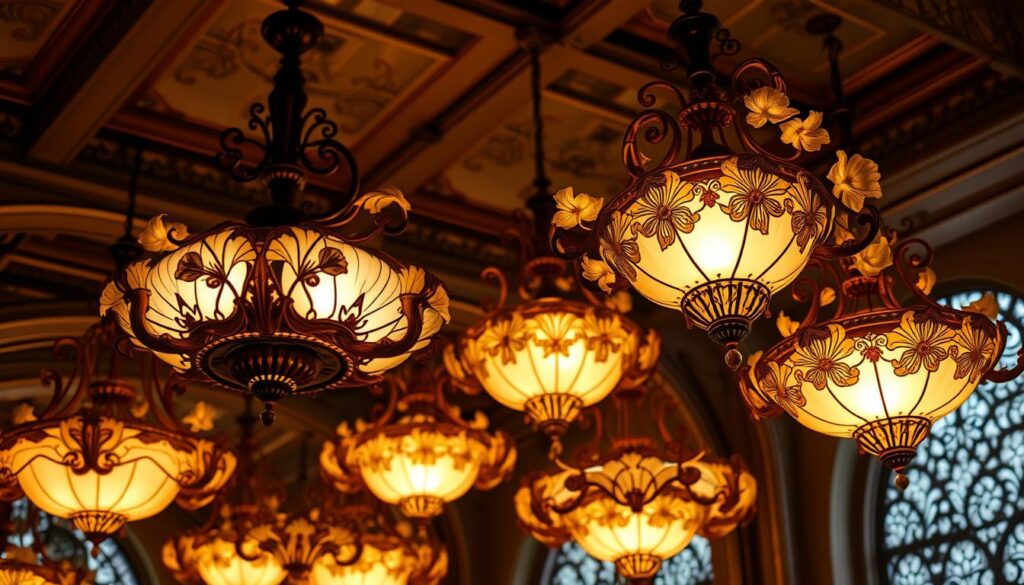
Art Nouveau lighting is known for its flowing lines and natural shapes. These designs are often inspired by nature. They light up the room and add to its beauty.
Types of Lighting Fixtures
Art Nouveau lighting comes in many forms, each with its own special touch. Some of the most famous types are:
- Table lamps with bases that look like vines or flowers.
- Chandeliers with detailed metalwork and colorful glass.
- Sconces with curved arms and fun designs.
| Lighting Fixture | Description | Characteristics |
|---|---|---|
| Table Lamp | Has a base that’s often sculptural | Sinuous lines, organic forms |
| Chandelier | Has many levels with detailed work | Stained glass, metalwork |
| Sconce | Is mounted on walls with curved or twisted arms | Decorative motifs, curved lines |
Incorporating Natural Light
Art Nouveau design also values natural light. Big windows, skylights, and glass doors let in lots of sunlight. This makes the inside feel connected to the outside.
To make the most of natural light, designers often choose simple window treatments. They might use thin fabrics that let light through but keep it soft. This makes the space brighter and shows off the design’s details.
Wall Treatments and Art Nouveau
The ornamental style of Art Nouveau is seen most in its wall treatments. This design trend still inspires many with its flowing lines and organic shapes. We’ll look at how to add Art Nouveau touches to your walls.
Wallpaper Designs
Art Nouveau wallpapers feature flowing patterns and natural themes. Floral patterns, vines, and leaves are common, shown in a stylized way. These designs bring elegance and sophistication to any room.
When picking an Art Nouveau wallpaper, think about the color and how it fits with your decor. Rich, deep hues were common back then, but today you can find softer shades too. Choose a design that shows the era’s love for nature.
| Design Element | Characteristics | Modern Twist |
|---|---|---|
| Floral Patterns | Sinuous lines, natural motifs | Bold colors, abstract interpretations |
| Vines and Leaves | Organic forms, flowing designs | Mixed with geometric patterns |
| Color Palette | Rich, deep hues | Soft pastel shades, metallic accents |
Mural and Decorative Painting Techniques
Murals and decorative painting were big in Art Nouveau. These methods let you personalize your walls. Mural paintings often showed idyllic scenes or abstract designs that seemed to come alive.
To bring this into your home, think about hiring a professional or using stencils. Stenciling is a DIY-friendly way to get a similar look. Pick one accent wall to make a bold statement without overwhelming the room.
Adding these wall treatments to your home captures Art Nouveau’s spirit. Whether with wallpaper or mural painting, these elements bring a piece of history into your space.
Incorporating Art Nouveau Art
The sinuous lines and organic forms of Art Nouveau art are perfect for interior decorating. It can beautifully enhance any room with its vintage decor elements.
There are several ways to add Art Nouveau art to your space. Start by exploring famous artworks that showcase this style.
Famous Artworks to Consider
Art Nouveau was a big movement in the early 20th century. Many famous artists, like Alphonse Mucha, Charles Rennie Mackintosh, and René Lalique, created iconic works. Their art often features flowing curves and natural motifs, adding elegance to your home.
To add these artworks to your decor, look for reproductions or original pieces that match your budget and style. For example, a Mucha print or a Lalique glass piece can beautifully enhance your artistic layout.
Finding Local Artists or Reproductions
If you want something unique or to support local talent, look for local artists who work in the Art Nouveau style. Many local art schools, galleries, and online platforms showcase such artists. You can also find reproductions of famous Art Nouveau pieces, which are more affordable and still capture the style’s essence.
When searching for local artists or reproductions, reach out to art communities or attend local art events. These are great ways to find new talent and unique pieces that will enhance your vintage decor.
By adding Art Nouveau art to your home, you create a space that is not only beautiful but also rich in history and character.
DIY Art Nouveau Elements for Your Home
To add elegance to your home, try DIY projects inspired by Art Nouveau. This style is known for its flowing lines and natural shapes. You can bring it into your space with various DIY elements.
Simple Projects to Start With
There are many DIY Art Nouveau projects perfect for beginners.
- Decorative Motifs: Make your own designs inspired by nature, like leaves or flowers. Use wood, metal, or paper mache.
- Lighting Fixtures: Create unique lights with Art Nouveau shapes. Use stained glass or metalwork.
You can make a beautiful stained glass piece for your windows or doors. It will remind you of Louis Comfort Tiffany’s work.
Resources for Materials
Finding the right materials is key for your DIY projects. Here are some places to look:
- Local craft stores for wood, metal, and glass.
- Online marketplaces for unique materials.
- Recycle or repurpose old items for your Art Nouveau theme.
| Material | Source | Potential Use |
|---|---|---|
| Stained Glass | Craft Stores, Online | Lighting Fixtures, Decorative Panels |
| Wood | Hardware Stores, Salvage Yards | Furniture, Decorative Motifs |
| Metal | Hardware Stores, Online | Lighting Fixtures, Decorative Accents |
Charles Rennie Mackintosh once said,
“There is hope in honest error. All the rest is mere lying.”
This quote shows the beauty of DIY projects. It’s about trying new things and learning from mistakes.
Maintaining Your Art Nouveau Space
To keep your Art Nouveau home looking great, regular care is key. This style, based on old design trends, needs careful attention. It helps keep its detailed designs and decorative arts in top shape.
Caring for Antique Pieces
Looking after antique furniture and decor is very important. Dust them gently with a soft cloth. Stay away from strong chemicals that can harm the finish or the materials. For complex items, getting a professional for restoration might be a good idea.
Preservation Tips
To keep your Art Nouveau interiors in great condition, keep the environment stable. Don’t let extreme temperatures or humidity damage the materials. Use UV-filtering glass on windows and display cases to stop fading.
By following these tips, you can enjoy your Art Nouveau space for many years. You’ll appreciate its unique mix of decorative arts and old design trends.