
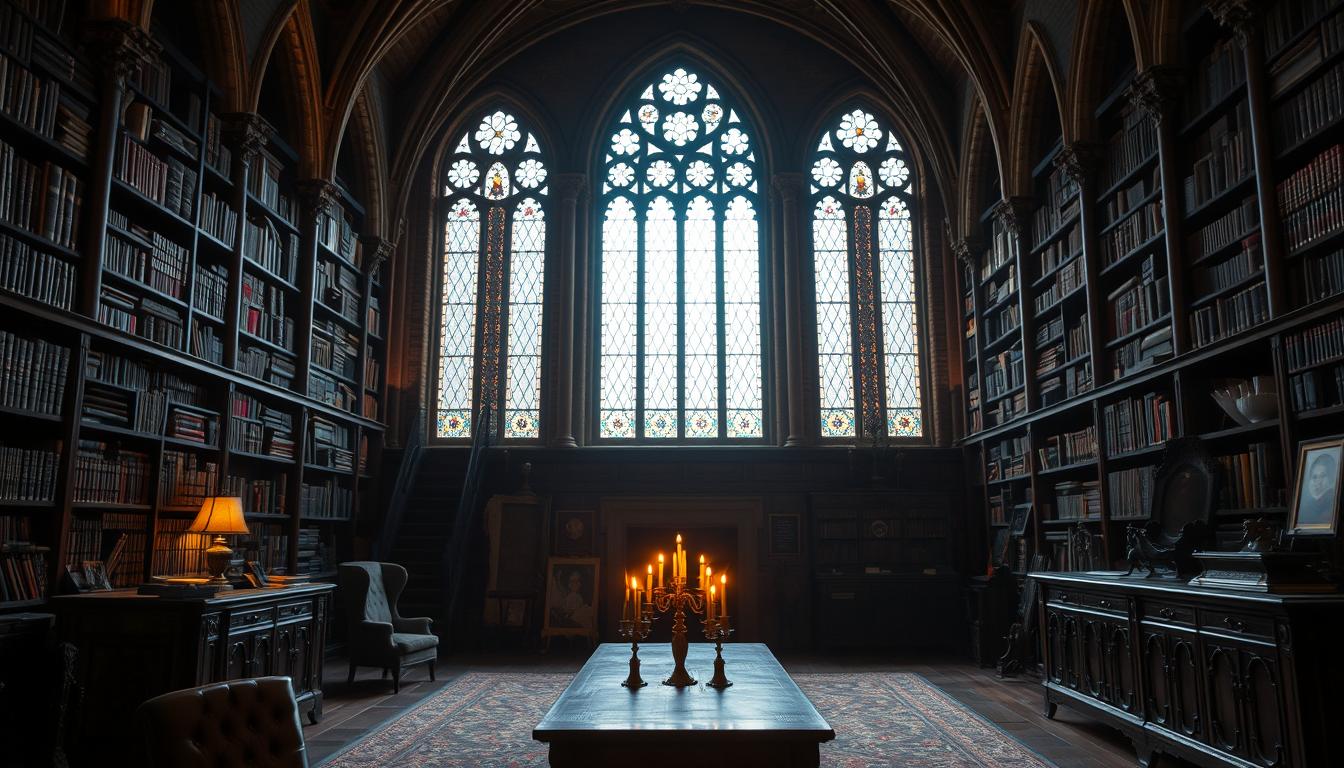
Gothic interior design brings mystery, drama, and romance into our homes. It takes us back to a time of grandeur and luxury. This style is all about dramatic lighting, intricate patterns, and rich textures. It’s perfect for those who love to stand out.
Gothic decor started in medieval times. Over the years, it has grown, adding new elements to its history. By grasping the core of this style, we can create a moody and mysterious ambiance in our homes.
Key Takeaways
- Understand the historical context of Gothic interior design
- Learn how to incorporate dramatic lighting and rich textures
- Discover the key elements that define Gothic decor
- Master the art of creating a moody and mysterious ambiance
- Explore the evolution of Gothic style over time
Understanding the Essentials of Gothic Interior Design
To make a Gothic-inspired home, knowing the key elements is crucial. Gothic interior design takes cues from medieval architecture. It brings grandeur and mystery into your space.
Defining Gothic Aesthetics
Gothic style is all about drama and luxury. It uses dark, rich colors and intricate patterns. It’s not just about looks; it’s about feeling like you’re in another time.
Pointed arches, ribbed vaults, and flying buttresses are hallmarks of Gothic architecture. These elements are often seen in interior design, through furniture and decorations.
Key Characteristics of Gothic Style
Gothic interior design is known for dark colors, ornate furniture, and medieval touches. Here’s a quick guide to these features:
| Characteristic | Description | Examples |
|---|---|---|
| Color Palette | Dark, rich hues | Deep reds, blacks, dark purples |
| Furniture | Ornate, intricate designs | Carved wooden pieces, Gothic arches |
| Decorative Elements | References to medieval motifs | Stained glass, crosses, gargoyles |
By using these elements, you can create a space that feels truly Gothic. It combines history with today’s needs.
Historical Influences on Gothic Design
To truly appreciate Gothic interior design, we must look at its history. It starts with Gothic architecture, known for its dramatic and mysterious look. This style began in the medieval period.
Origins of Gothic Architecture
Gothic architecture began in the 12th century, a big change from Romanesque. It used pointed arches, ribbed vaults, and flying buttresses. These features allowed for taller, more elaborate buildings.
The innovation in Gothic architecture was not just about looks; it was about creating a sense of verticality and lightness. This symbolized the desire to reach the divine.
The term “Gothic” was once used negatively by Renaissance architects. They saw it as less refined than classical styles. Yet, it became a key part of medieval Europe. Buildings like Notre-Dame de Paris show its grandeur.
The Role of the Victorian Era
Then, the Victorian era brought back Gothic styles, known as the Gothic Revival. This 19th-century period was a time of romanticizing the medieval past. It was also a reaction against industrialization’s rapid changes.
The Gothic Revival made Gothic elements part of home design, available to the middle class.
In the Victorian era, Gothic design was more than just copying medieval styles. It was about new interpretations. Furniture, textiles, and decorative arts showed Gothic influences. They featured intricate patterns, pointed arches, and a sense of drama and mystery.
This era was crucial in shaping today’s Gothic interior design. It mixed historical references with modern tastes.
Understanding Gothic design’s history is essential. By following its journey from medieval architecture to the Victorian era, we see its rich cultural background. This background shapes the Gothic interior design we know today.
Color Palettes for Gothic Interiors
The color palette is key in Gothic interior design. It makes a space both intriguing and hauntingly beautiful. When picking colors, think about the look you want to achieve.
Dark and Dramatic Hues
Gothic interiors use dark and dramatic colors. These create mystery and drama. Deep blacks, rich reds, and dark purples are common in Gothic design. Use these on walls, furniture, and accents for a unified Gothic feel.
Here’s a color palette to consider:
| Color | Hex Code | Usage |
|---|---|---|
| Deep Black | #000000 | Walls, Furniture |
| Rich Red | #8B0A1A | Accents, Upholstery |
| Dark Purple | #4C0033 | Walls, Drapery |
Accent Colors to Use
Dark and dramatic colors are the base of Gothic design. But, accent colors add depth and complexity. Metallic tones like gold, silver, or copper bring luxury and sophistication. Use them in lighting, hardware, or decor.
By mixing dark colors with accent colors, you create a Gothic space that’s haunting and beautiful. Whether it’s a cozy nook or a large area, the right colors make it immersive.
Essential Furniture for Gothic Spaces
To make a true Gothic space, picking the right furniture is key. It should show the style’s deep history and mystic feel. The right pieces not only look great but also make the space feel mysterious and grand.
Styles of Furniture—What to Choose
Gothic furniture stands out with its detailed carvings, bold shapes, and fancy designs. Look for furniture that reminds you of the Middle Ages, like:
- Ornate wooden cabinets with intricate carvings
- Heavily upholstered chairs and sofas with Gothic-inspired patterns
- Large, ornate mirrors with carved frames
Ornate details are key in Gothic furniture. Search for pieces with carvings of leaves, mythical creatures, or religious symbols. These add beauty and tell stories, making the space even more enchanting.
Recommended Materials for Authenticity
Choosing the right material is important for a true Gothic look. Dark, rich woods like mahogany, walnut, and ebony are best. They bring depth and warmth to the space.
| Material | Characteristics | Use in Gothic Design |
|---|---|---|
| Mahogany | Rich, reddish-brown color | Ideal for furniture frames and paneling |
| Walnut | Dark, dense hardwood | Used for intricate carvings and ornate details |
| Ebony | Very dark, fine-grained wood | Often used for decorative accents and inlays |
As the famous interior designer,
“The key to a successful Gothic interior lies in the balance between drama and subtlety.”
This balance is found by mixing bold pieces with more subtle ones. This creates a space that’s both grand and functional.
Textiles and Fabrics in Gothic Design
Textiles are key in Gothic decor, adding mystery and depth. They make a room feel cozy and luxurious. In Gothic design, fabrics are more than just for covering; they’re a vital part of the look.
Rich Textiles
Rich textiles are vital for a true Gothic feel. Velvet, with its softness and look, is a top pick. Velvet drapes in deep colors like burgundy or navy blue add drama. Tapestries with detailed designs also draw the eye, adding to the room’s mystique.
When adding Gothic touches, think about fabric texture and weight. Velvet and silk are great for their depth and coziness. You can find inspiration in styles like dark academia interior design, which also values rich fabrics.
Patterns That Enhance the Gothic Feel
Gothic textiles often have detailed patterns, like floral motifs and damask. These designs reflect the style’s historical roots. You can use them in upholstery and wall hangings.
To boost the Gothic vibe, use patterns that hint at mystery and old times. Fabrics with damask patterns or floral motifs add complexity. Just make sure to match these patterns with the room’s colors to keep it balanced.
Iconic Gothic Decor Elements
Iconic Gothic decor elements are key to making a space mysterious and dramatic. They honor Gothic design’s history and add depth and character to a room.
Exploring Gothic interiors shows us certain decor elements are standout. Antique and vintage treasures are crucial, linking us to the past.
Antique and Vintage Treasures
Adding antique and vintage items to your space brings authenticity and charm. Look for unique pieces in antique shops or flea markets. These items often have stories that enhance your decor.
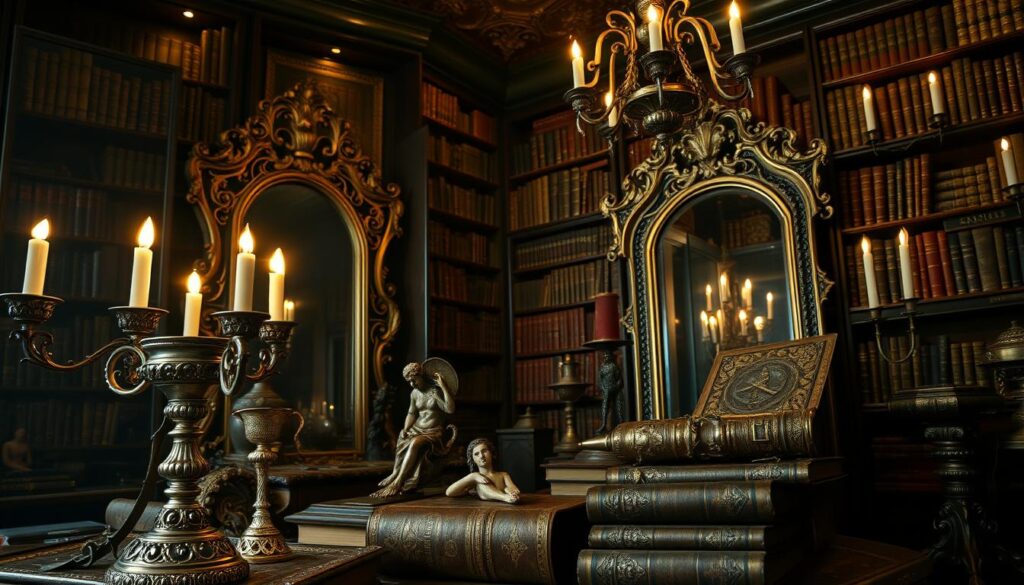
Popular items for Gothic decor include carved furniture, old candelabras, and vintage religious artifacts. As “The right antique piece can be the cornerstone of your Gothic design”, finding the perfect items is worth it.
Wall Art and Tapestries
Wall art and tapestries are vital in Gothic decor, turning a room into a dramatic space. Tapestries, in particular, add warmth and texture with scenes that fit the Gothic style.
Choose wall art that reflects the Gothic style, like prints of Gothic architecture or mysterious landscapes. The famous designer once said,
“The art you choose for your walls can dramatically alter the ambiance of a room, making it feel more intimate or more expansive.”
This shows how important the right art is for your Gothic space.
By carefully choosing these Gothic decor elements, you can make a space that’s visually stunning and full of atmosphere and character.
Lighting Choices for a Gothic Ambiance
Lighting is key in creating the mysterious feel of Gothic interiors. The right lights make the space feel real and engaging.
Types of Lighting Fixtures
Gothic spaces use a variety of lights for drama. Candelabras, chandeliers, and sconces are favorites. They add mystery and style.
For example, candelabras with many arms create a warm, flickering light. Chandeliers are grand and central. Sconces offer soft light, perfect for highlighting art or architecture.
The Impact of Candlelight
Candlelight is essential for a Gothic vibe. It brings mystery and closeness to a room. Candles can be placed anywhere, from candelabras to simple holders.
The light from candles can change, making the space feel different. This makes candlelight a must-have in Gothic design. It fits any mood or event.
Creating a Mysterious Atmosphere
The heart of Gothic interior design is its ability to create a mysterious vibe. This is done by carefully choosing accessories and adding nature. To achieve this, we must pick elements that add to the Gothic style’s mystique and charm.
The Role of Accessories
Accessories are key in setting the Gothic mood. Ornate candelabras, vintage items, and antique furniture add depth and mystery. They show the Gothic design’s historical roots and make the space feel enigmatic.
Choose accessories with a story or history. For example, an old vase or a vintage clock can spark conversations. They make your Gothic space even more intriguing.
“The art of interior design is not just about filling a space with furniture and decor; it’s about creating an atmosphere that resonates with the soul.”
Incorporating Nature with Gothic Elements
Adding natural elements to your Gothic design creates an interesting contrast. Using plants with dark foliage or flowers can enhance the Gothic feel. Plants like black calla lilies or dark-leaved succulents bring nature into your decor.
| Nature Element | Gothic Design Element | Combined Effect |
|---|---|---|
| Dark Foliage Plants | Ornate Candelabras | Mysterious Ambiance |
| Antique Botanical Prints | Gothic Archways | Historic Elegance |
| Natural Stone Features | Dark Wood Furniture | Organic Sophistication |
By mixing accessories and natural elements, we can craft a Gothic atmosphere that’s both mysterious and welcoming. The trick is to find a balance that enhances the look without overwhelming it.
Furniture Arrangement Tips for Gothic Style
Creating a Gothic-inspired space is more than just picking the right furniture. It’s about arranging it in a way that boosts the room’s look. The furniture layout can make your Gothic room feel welcoming or too much.
Layout Options for Gothic Rooms
Start by picking a focal point, like a standout piece of furniture or a bold light fixture. Place other furniture around it to guide the eye to the center.
In bigger rooms, breaking the space into areas can add coziness, typical of Gothic interiors. Use rugs, curtains, or screens to mark these zones.
Maximizing Space with Dark Decor
Dark decor is key in Gothic style but can shrink rooms. Use mirrors to bounce light and make the room seem bigger.
Choosing furniture that does more than one thing can also save space. For instance, a storage ottoman can be a seat and a place to store things, keeping the floor open.
With careful furniture arrangement and smart choices like mirrors and multi-functional pieces, you can craft a Gothic room that’s both striking and practical.
Common Mistakes in Gothic Interior Design
To create a Gothic-inspired space, balance drama with functionality. It’s easy to fall into pitfalls that make your space look cluttered or uninviting.
Overcrowding Your Space
One big mistake is having too many decorative elements. Gothic decor is rich and ornate, but too much can overwhelm a room.
To fix this, pick a few standout pieces like intricate candelabras or ornate tapestries. Then, add simpler items to balance them. This makes your space look better and feel more welcoming.
Ignoring Functionality
Another mistake is forgetting about your space’s function. A beautiful space is great, but a functional one is just as important.
Think about how your room flows. Make sure there’s enough room to move around easily. Choose furniture that looks good and is also comfy and useful.
| Common Mistake | Solution |
|---|---|
| Overcrowding with too many decorative elements | Select a few statement pieces and balance with simpler elements |
| Ignoring the functionality of the space | Consider the room’s flow and choose practical, comfortable furniture |
Inspiration Sources for Gothic Design
Exploring Gothic interior design, we find many sources of inspiration. The Gothic style, with its deep history and dramatic flair, is full of ideas. It helps us create unique and captivating spaces.
Notable Gothic Revivals
The Gothic Revival of the 18th and 19th centuries greatly influenced Gothic design. This time saw a renewed interest in medieval architecture and aesthetics. It led to the creation of iconic buildings and interiors that still inspire designers today.
We can learn from architects like Augustus Pugin, who supported the Gothic Revival style.
Modern Takes on Gothic Aesthetics
Today, the Gothic style is being reimagined in new ways. Modern Gothic interiors mix traditional elements with modern materials and technology. This creates a unique blend of old and new.
Designers are adding Gothic revival touches to their work. This results in spaces that are hauntingly beautiful and eerily sophisticated. Exploring these modern interpretations can give us fresh ideas for our own designs.