
Did you know a well-designed living space can boost your property value by up to 10%? This shows how crucial interior decorating ideas are for a stylish and useful home environment. A well-designed space not only makes your home look better but also makes your life better.
In our journey through home design interior, we’ll share our best tips. We’ll show you how to turn your living space into a stylish and cozy haven. We’ll guide you on picking the right colors and adding statement pieces. This way, your space will show off your personality and meet your needs.
Key Takeaways
- Understand the importance of a well-designed living space
- Discover how to increase your property value with interior decorating
- Learn the key elements to create a stylish and functional home
- Explore the role of color palettes in home design
- Find out how to incorporate statement pieces into your decor
Understanding the Principles of Home Design Interior
Creating a beautiful and functional home interior needs a deep understanding of key design principles. These principles help make a space that looks good and feels comfortable and useful.
Importance of Balance in Design
Balance is key in home design, meaning how elements are spread out in a space. There are three main types: symmetrical, asymmetrical, and radial. Symmetrical balance uses mirrored elements for order and formality. Asymmetrical balance uses different elements for a dynamic and interesting space.
To balance your home, think about furniture, color, and texture. A big piece of furniture can be balanced by smaller items on the other side. Knowing how to balance these elements makes your space harmonious and inviting.
The Role of Color Theory
Color theory is crucial in modern home design, setting the mood and feel of a room. Warm colors like reds and oranges make a space cozy and lively. Cool colors like blues and greens bring calmness and relaxation.
Choosing the right color palette is important. Think about the room’s natural light and furniture colors. A good color scheme can make your home feel bigger and more connected. For a harmonious space, mix colors that complement each other.
Scale and Proportion in Spaces
Scale and proportion are essential in home design, making sure furniture and decor fit the room. Big furniture in a small room can feel cramped. Tiny furniture in a big room looks out of place.
To get scale and proportion right, measure your room and furniture before buying. Consider ceiling height, window size, and other room elements. This way, you create a balanced and welcoming space.
Choosing the Right Color Palette for Your Space
Color palettes are key in setting the mood for your home’s interior. A good color scheme can make your home look bigger and more welcoming.
When picking colors, think about the mood you want in your home. Different colors can make you feel different ways. So, picking the right colors is important for the right feel.
Complementary vs. Analogous Colors
Color theory basics help in choosing colors. Two main ideas are complementary and analogous colors.
Complementary colors are pairs that are opposite each other on the color wheel. They create a striking look. Examples are blue and orange or red and green. Analogous colors are three colors next to each other on the wheel. They make a calm and harmonious palette.
| Color Type | Description | Examples |
|---|---|---|
| Complementary | High contrast, visually appealing | Blue & Orange, Red & Green |
| Analogous | Harmonious, soothing | Blue, Green, Yellow-Green |
How to Use Neutrals Effectively
Neutral colors like beige, gray, and white are timeless. They’re great for a sophisticated look. Use the 60-30-10 rule: 60% of the room is a neutral, 30% a secondary color, and 10% an accent.
Neutrals give a clean base for adding color with furniture, art, or accessories. This makes it easy to change your decor without painting.
Knowing color theory and using neutrals well can make your home stylish and inviting. It shows your personal style and gives home renovation inspiration for the future.
Whether you want a bold look or something more subtle, the right color palette is crucial. It helps create stylish interior designs that you’ll love.
The Impact of Lighting in Home Design
Lighting is key in home design, setting the mood and tone of a space. It’s essential for making a room look good, feel cozy, and seem larger.
When planning your home’s lighting, think about both function and emotion. Lighting can change a room’s feel greatly. It can make a room feel bigger, cozier, or more welcoming, based on the lighting used.
Types of Lighting to Consider
There are many lighting types for home design, each with its own purpose. These include:
- Ambient lighting, which lights up a whole space.
- Task lighting, for specific tasks like reading or cooking.
- Accent lighting, to highlight certain features or areas.
Layering Light for Functionality and Mood
Layering different lighting types is crucial for a functional and inviting space. Mixing ambient, task, and accent lighting creates a balanced scheme. This meets your needs and boosts your home’s ambiance.
For example, in a living room, use table lamps (task), floor lamps (ambient), and picture lights (accent). This mix creates a warm, inviting atmosphere.
Also, controlling lighting levels can change a space’s mood. Dimmable lights, smart systems, and layered designs offer flexibility. They let you adjust lighting for different activities or times.
Selecting Furniture That Enhances Your Interior
Finding the right furniture is key to a home that looks good and works well. The right pieces make your space look better and feel comfortable.
Choosing furniture means picking a style that fits your home. The debate between modern and traditional styles is ongoing. Each style has its own look and benefits.
Furniture Styles: Modern vs. Traditional
Modern furniture is sleek, simple, and all about function. It’s perfect for those who like a clean, simple look. Traditional furniture, on the other hand, is classic, detailed, and cozy. It’s great for homes that feel warm and welcoming.
Key differences between modern and traditional furniture include:
- Design aesthetics: Modern furniture is simple, while traditional furniture is ornate.
- Materials: Modern pieces use new materials, while traditional furniture sticks to wood.
- Comfort: Both styles focus on comfort, but in different ways.
Functional Pieces That Maximize Space
Function is just as important as style, even more so in small homes. Pieces that save space are practical and help keep things tidy.
Some strategies for maximizing space include:
- Choosing furniture that does more than one thing, like storage ottomans or beds with drawers.
- Picking furniture that takes up less room, like nesting tables or small sofas.
- Using vertical space with tall shelves or wall-mounted storage.
By thinking about both style and function, you can make a home that’s beautiful, useful, and comfortable.
Incorporating Textiles for Comfort and Style
Textiles are more than just functional items; they’re key to a stylish and comfy home design interior. The right textiles can make a room feel welcoming and unique.
Choosing the right textiles is crucial. Each room has its own needs based on its purpose and how much it’s used.
Choosing the Right Fabrics for Each Space
The fabric you pick can greatly affect a room’s comfort and style. For busy areas or homes with pets and kids, durable fabrics like cotton or synthetic blends work best. On the other hand, luxurious fabrics like silk or velvet can add elegance to formal rooms.
Here’s a look at different fabrics and their best uses:
| Room Type | Recommended Fabric | Characteristics |
|---|---|---|
| Living Room | Cotton, Linen | Durable, Easy to Clean |
| Bedroom | Silk, Velvet | Luxurious, Soft |
| Kitchen | Synthetic Blends | Stain-Resistant, Easy to Maintain |
The Power of Rugs and Curtains
Rugs and curtains are crucial in interior decorating ideas. A good rug can define a space, add warmth, and match the room’s colors. Curtains control light, enhance privacy, and add beauty.
When picking rugs and curtains, think about material, color, and pattern. Make sure they fit with your decor and meet your needs.
By carefully choosing textiles, you can make your home both beautiful and practical. Whether updating one room or redoing your whole house, textiles are a great way to improve comfort and style.
Creating Functional Layouts
Modern home design focuses on layouts that are stylish and functional. A good layout makes your home look great and feel better to live in.
Choosing between an open floor plan or a segmented layout is a big decision. Let’s look at the good and bad of open floor plans.
Open Floor Plans: Pros and Cons
Open floor plans are popular for making homes feel bigger and for bringing people together.
Pros:
- More space and better airflow
- Great for socializing
- Easy to move furniture around
Cons:
- Less privacy
- Noisy
- Hard to make different areas
To solve these problems, you can use zoning to make different areas in an open floor plan.
Zoning Spaces for Different Activities
Zoning means dividing your home into areas for different things like cooking, eating, and relaxing. You can use furniture, rugs, and lights to do this.
| Zoning Technique | Description | Benefits |
|---|---|---|
| Furniture Placement | Using furniture to create separate areas | Defines spaces without walls, enhances functionality |
| Rug Placement | Placing rugs to demarcate different zones | Adds warmth, defines spaces visually |
| Lighting Design | Using different lighting schemes for different areas | Creates ambiance, highlights different activities |
By using these zoning methods, you can enjoy an open floor plan’s benefits without its downsides.
In conclusion, a good layout balances looks and use. Knowing the pros and cons of layouts and using zoning can make your home both beautiful and practical.
Personalizing Your Space with Accessories
The right accessories can change your space, showing off your unique style. They are more than just decorations. They are the final touches that make your home stand out.
Art and decor are key in making your space personal. They add beauty and let you show your personality.
The Role of Art and Decor
Art and decor are vital in interior design. They can change a room’s feel. A good piece can bring elegance, sophistication, or fun, depending on what you like.
“Art is the only way to run away without leaving home.” – Twyla Tharp
Think about your space’s style and theme when picking art and decor. For example, a modern home might look great with abstract art. A traditional home could be enhanced with classical paintings.
How to Arrange Accessories for Impact
It’s important to arrange accessories well to make your space look good. Here are some tips:
- Start with a focal point, like a statement art piece or vase.
- Put similar items together, like vintage books or decorative bowls.
- Vary the heights and textures of your accessories for depth and interest.
- Avoid over-accessorizing to prevent clutter.
Let’s look at how to arrange accessories in a living room.
| Accessory | Placement | Effect |
|---|---|---|
| Decorative Vase | Coffee Table | Adds elegance |
| Art Piece | Above Sofa | Creates a focal point |
| Throw Pillows | Sofa | Adds color and texture |
As shown, the right placement of accessories can greatly improve your space’s look.
In conclusion, making your space personal with accessories is an art. By choosing and arranging accessories thoughtfully, you can create a beautiful space that shows your personality.
Sustainable Home Design Practices
How we design our homes affects the planet’s health. We can choose to make our homes beautiful, functional, and eco-friendly. This helps create a better future for all.
Eco-Friendly Materials to Consider
Choosing the right materials is key to sustainable home design. Look for recycled, recyclable, or sustainably sourced options. For example, using reclaimed wood for floors or furniture is stylish and eco-friendly.
Low-VOC paints and finishes also improve air quality. They make your home healthier to live in.
In contemporary home decor, natural elements like bamboo and cork are great. They’re stylish and good for the planet. Adding plants is also a smart choice for a greener home.
Energy Efficiency in Interior Design
Energy efficiency is vital in home design. Design spaces to use natural light and air. This cuts down on the need for artificial lighting and heating.
Using energy-efficient appliances and LED lights also helps. They use less power, saving you money and the planet.
The layout and orientation of your home matter too. Smart window placement can reduce heating and lighting needs. This makes your home cozy and saves energy.
By choosing sustainable design, we can make homes that are good for the planet. Whether you’re renovating or just want to be greener, there are many options. They fit any style or need.
Navigating Trends vs. Timeless Style
Interior design is complex, with trends and timeless style at odds. In luxury design, finding balance is key. You want style and function, but they often clash.
To make a functional home interior that lasts, know the difference between trends and timeless style. Trends are new and popular, while timeless style is classic and enduring.
Identifying Your Personal Style
Before adding trends, know your style. Understand what you like, your lifestyle, and your home’s architecture.
- Think about your daily habits and how they affect your space needs.
- Reflect on the styles and elements you’re drawn to.
- Assess your home’s architecture and how it shapes your design choices.
Knowing these factors helps you create a design that’s both personal and lasting.
How to Blend Trends Tastefully
With your style in mind, start adding trends. But do it in a way that keeps your design timeless.
- Begin with small items like throw pillows, rugs, or vases.
- Follow the 60-30-10 rule: 60% timeless, 30% classic with a twist, 10% trendy.
- Choose quality over quantity, focusing on a few statement pieces.
This way, you can enjoy current trends while keeping your design timeless and sophisticated.
| Trend | Timeless Element | How to Combine |
|---|---|---|
| Bold Colors | Neutral Backgrounds | Use bold colors in accents against a neutral backdrop. |
| Minimalist Decor | Classic Furniture | Pair minimalist decor with classic, well-crafted furniture pieces. |
| Sustainable Materials | Traditional Craftsmanship | Incorporate sustainable materials into traditionally crafted pieces. |
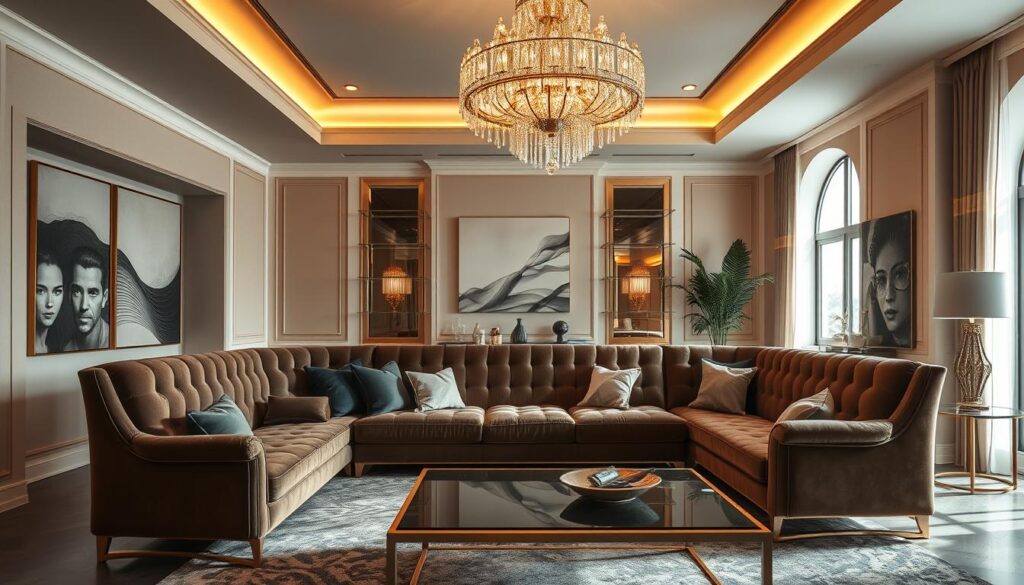
By balancing trends and timeless style, you can create a luxury interior that’s stylish and lasting. It reflects your taste while being functional and sophisticated.
Home Design Interior for Small Spaces
Creating a beautiful and functional home interior in a small space is achievable with the right strategies. We will explore how to make the most of limited square footage. This is done by employing effective design principles and clever furniture choices.
Tips for Making Small Areas Feel Larger
One of the key challenges in designing small spaces is creating the illusion of more room. Using light colors on walls and floors can help reflect light and make the space feel more expansive. Also, minimizing clutter is crucial, as clutter can make a small space feel cramped and overwhelming.
- Opt for multi-functional furniture pieces that serve more than one purpose.
- Utilize vertical space by installing shelves or storage units that go up to the ceiling.
- Select furniture with legs rather than bulky bases to create a sense of openness.
Another effective strategy is to use mirrors wisely. Placing a mirror opposite a window can help reflect natural light. This creates the illusion of a larger space.
Multi-Functional Furniture Solutions
In small spaces, every piece of furniture counts. Multi-functional furniture is designed to provide more than one function. For example, a storage ottoman can serve as both a seat and a storage container.
| Furniture Piece | Primary Function | Secondary Function |
|---|---|---|
| Sofa Bed | Seating | Guest Bed |
| Storage Ottoman | Footrest | Storage |
| Drop-Leaf Table | Dining Table | Additional Workspace |
By incorporating these tips and furniture solutions into your small space design, you can create a functional, stylish, and comfortable living area. This area will feel larger than it is.
Embracing Technology in Interior Design
Technology is changing how we design our homes. It makes our living spaces more comfortable and convenient. Smart home features are at the heart of this change.
Smart Solutions for a Contemporary Home
Smart home tech lets us control lights, temperature, and security easily. For example, voice-controlled lights can change to match any mood. For more ideas, check out Cozy Nest Plans for decorating tips.
Enhancing Aesthetics with Technology
Technology adds beauty to our homes, not just function. Digital art frames and smart mirrors can make our homes look amazing. They help us create a modern, stylish space that shows off our taste.